
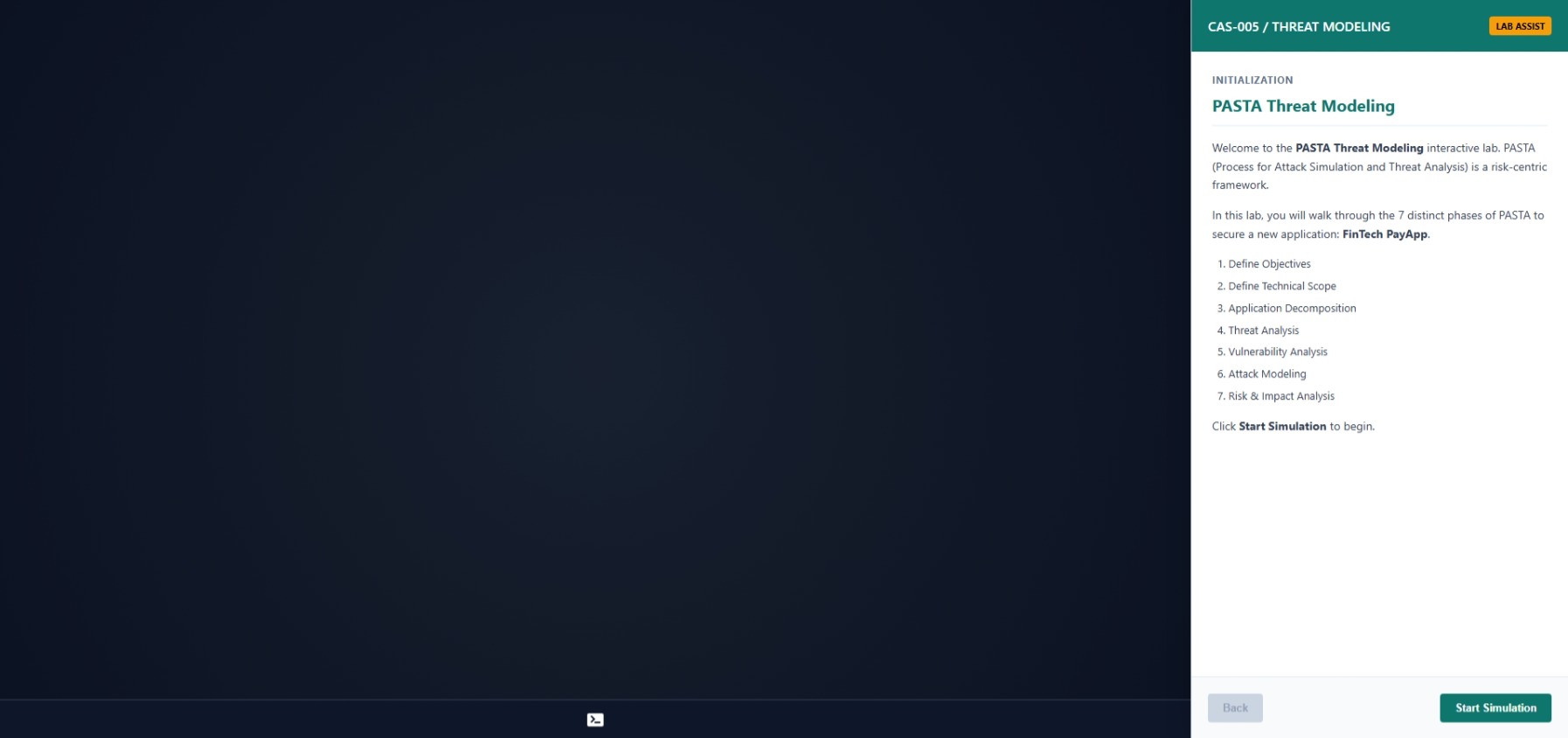
The PASTA (Process for Attack Simulation and Threat Analysis) framework systematically aligns business objectives with technical risk mitigation. Security teams execute this 7-step process to identify, model, and neutralize critical threats before adversaries exploit them.
Core Mechanics and Execution
PASTA operates as a risk-centric pipeline. Unlike pure software threat models, PASTA forces security teams to evaluate technical vulnerabilities through the lens of business impact. Data flows sequentially through seven distinct phases.
Step 1: Define Objectives
Security analysts identify the core business goals and critical assets. Teams evaluate what the application does and what data it handles. For example, a financial application handles PII (Personally Identifiable Information) and PCI (Payment Card Industry) data. The security team dictates requirements, such as maintaining 99.99% uptime and preventing unauthorized transactions.
Step 2: Define Technical Scope
Engineers map the technical footprint and network perimeter. Teams execute port scanners, like nmap, to discover active services, open ports, and software versions.
nmap -sV 10.0.50.12
Step 3: Application Decomposition
Architects break down the application infrastructure. They identify trust boundaries—points where data moves between different security levels, such as from the public internet to an internal API (Application Programming Interface). Analysts read architectural files to trace data paths and understand component interactions.
cat data_flow.json
Step 4: Threat Analysis
Cybersecurity professionals analyze threat intelligence—verified data about known attackers and their tactics. Teams search security logs to identify specific threat actors, such as FIN7 (a known financial threat syndicate), and map their preferred attack methods against the application architecture.
grep "FIN7" threat_intel.log
Step 5: Vulnerability Analysis
Security testers hunt for actual technical weaknesses on the scoped assets. They execute automated exploitation tools, such as sqlmap, against target endpoints to confirm theoretical vulnerabilities, like SQL Injection (SQLi), where attackers manipulate database queries.
sqlmap -u "http://10.0.50.12/api/balance?account_id=1" --batch
Step 6: Attack Modeling
Analysts map the discovered vulnerabilities to the threat intelligence. Teams generate attack trees—diagrams that visually map the specific steps an attacker takes to compromise a system. The tree proves how an external vulnerability achieves the threat actor’s end goal, such as data exfiltration (unauthorized data theft).
python3 generate_attack_tree.py --target "Data Exfiltration"
Step 7: Risk & Impact Analysis
The team calculates the residual risk and documents countermeasures. Analysts open the risk register and update the status of the vulnerability. They assign mitigation controls, such as deploying a WAF (Web Application Firewall) to block malicious traffic and implementing parameterized queries (secure coding practices) to neutralize the database threat.
nano risk_register.md
Leave a Reply