
Category: A+ Core 1 (220-1201)
The CompTIA A+ Core 1 (220-1201) exam serves as the foundational standard for understanding physical IT hardware, peripheral connectivity, local networking, and client-side virtualization. Modern helpdesk and field technicians must be proficient at configuring motherboards, troubleshooting mobile display assemblies, provisioning virtual machines, and maintaining multi-function printers.
This resource category provides technical reference sheets, performance-based question (PBQ) preparation workflows, and systematic troubleshooting flowcharts aligned directly with the 220-1201 objectives. Explore component compatibility matrices, cable and connector pinout guides, wireless frequency standards, and hardware diagnostic methodologies to ensure first-time exam success and day-one operational effectiveness.
-

C-Suite Briefings: Translating SEC Cyber Disclosure Rules to the Board
Security leaders must translate complex Securities and Exchange Commission (SEC) cybersecurity disclosure mandates into clear financial and operational risks for the Board of Directors. This translation process ensures executives understand legal requirements, allocate appropriate resources, and maintain regulatory compliance without getting lost in technical jargon. The SEC requires public companies to report material cybersecurity incidents…
-

Lab: Writing Custom ML-Driven Suricata Rules for Intrusion Detection
Machine learning (ML) models analyze massive datasets to identify hidden network anomalies, outputting specific threat indicators that engineers convert into custom Suricata intrusion detection rules. This lab demonstrates how to bridge predictive AI analysis with traditional signature-based network defenses to stop zero-day attacks (previously unknown and unpatched cyber threats). Suricata operates as an Intrusion Detection…
-

Analysis, Mitigation, and Hardening Your WordPress Cybersecurity Blog Against Attacks
Automated vulnerability scanners and botnets constantly probe WordPress websites to exploit misconfigurations, weak passwords, and vulnerable plugins. Defending your site requires analyzing attack patterns in your server logs and deploying layered security controls to shrink your attack surface and block malicious traffic.
-
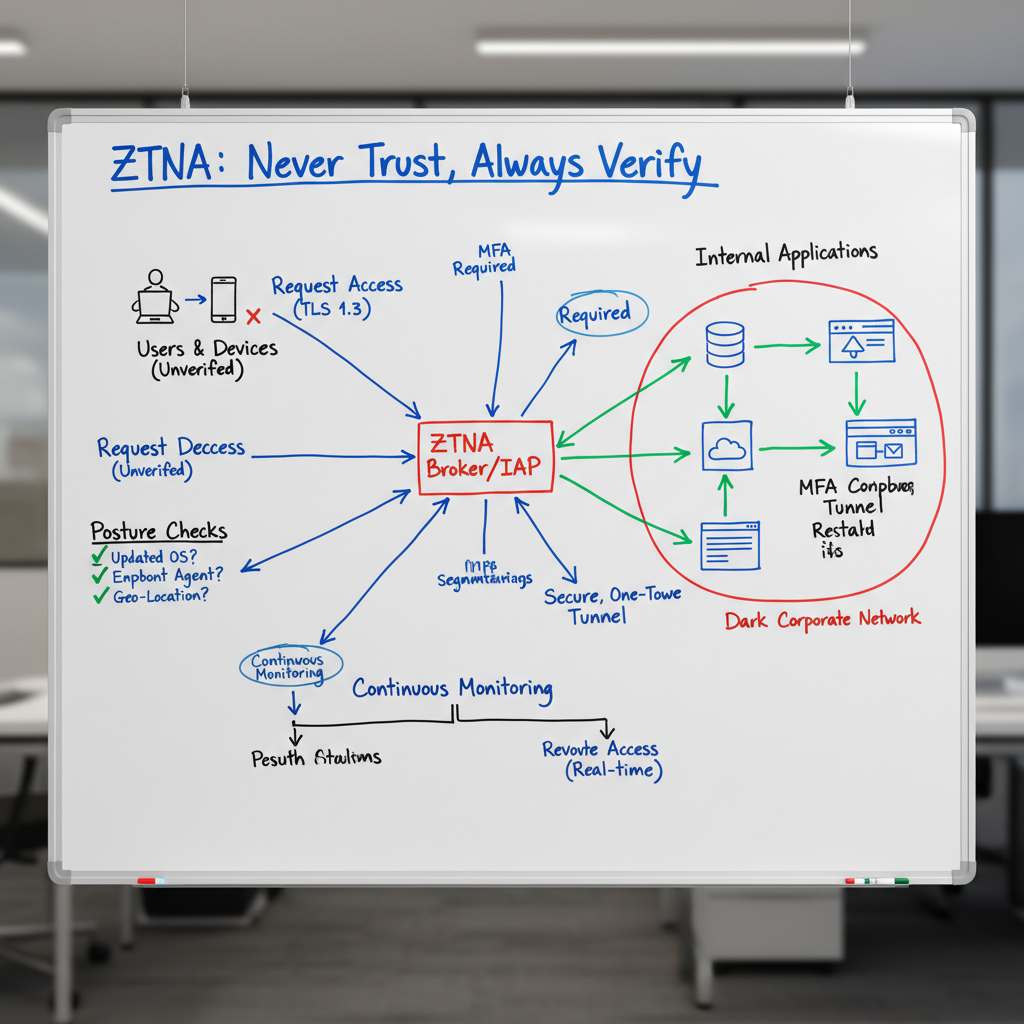
Network Security Essentials: Why ZTNA Finally Killed the VPN
Zero Trust Network Access (ZTNA) replaces the inherently flawed perimeter-based security model of traditional VPNs by shifting access controls directly to the application level. It demands continuous verification of user identity and device health for every single digital interaction, completely eliminating implicit trust. Virtual Private Networks (VPNs) create a wide-open tunnel into a corporate network.…
-

Lab: Deploying Decentralized Identity Wallets for Enterprise SSO
This lab configures a passwordless enterprise environment by connecting Decentralized Identity (DID) wallets to a Single Sign-On (SSO) gateway. Organizations use this setup to stop credential theft by completely removing central password databases. Architecture and Core Mechanics In a traditional network, a central server holds all user passwords. If hackers breach that server, they steal…
-

Advanced IAM: Decentralized Identity (DID) and Cross-Cloud Federation
Decentralized Identity (DID) and Cross-Cloud Federation eliminate centralized credential repositories by distributing cryptographic trust across verifiable data registries and federated trust brokers. These architectures neutralize single points of identity compromise and enforce Zero Trust continuous authentication across disparate multi-cloud ecosystems. Decentralized Identity (DID) Mechanics Traditional Identity and Access Management (IAM) relies on centralized Identity Providers…
-

Conducting a Drone & IoT Physical Security Site Survey
A physical security site survey actively identifies vulnerabilities in a facility’s perimeter and internal networks by mapping unauthorized IoT hardware and evaluating airspace defenses. Security teams execute these surveys to uncover physical blind spots, detect rogue signals, and deploy targeted countermeasures against aerial and network intrusions. Phase 1: Radio Frequency (RF) and IoT Sweeps Security…
-

Physical Security 2.0: Drone Detection, Biometric Liveness, and Anti-Tailgating AI
Modern physical security upgrades perimeter defenses to defeat advanced physical threats like aerial surveillance and biometric spoofing. Facilities now deploy AI-driven optical sensors, depth cameras, and radio frequency scanners to automate access control and track unauthorized physical intrusions in real time. Defending the Airspace: Drone Detection Systems Unmanned Aerial Vehicles (UAVs) bypass traditional fences and…
-

Configuring AI-Aware Enterprise DLP for Data Sovereignty
AI-aware Data Loss Prevention (DLP) engines dynamically classify and intercept unstructured payloads destined for public Large Language Models (LLMs), enforcing strict geographic data residency constraints. By replacing rigid regex pattern matching with contextual Natural Language Processing (NLP), these systems prevent unauthorized extraterritorial data transit while preserving legitimate computational workflows. Architecture and Payload Inspection Mechanics Traditional…
-

Data Sovereignty in 2026: Navigating the EU AI Act and Cross-Border Data Flows
The 2026 enforcement of the European Union Artificial Intelligence Act fundamentally restructures global enterprise architectures, mandating strict data sovereignty protocols to prevent unauthorized extraterritorial processing of machine learning datasets. Security architects must engineer dynamic, policy-driven routing and cryptographic localization mechanisms that enforce data residency requirements without degrading the performance of distributed computational workloads. Architectural Mechanics…